
Ultimate Guide to Crypto Taxation Laws in Bangladesh
Why Crypto Taxation Laws Matter in Bangladesh
Cryptocurrency has taken the world by storm, and Bangladesh is no exception. Despite its growing popularity, the legal and tax landscape surrounding digital assets in Bangladesh remains complex and often confusing. Crypto taxation laws in Bangladesh are a crucial topic for investors, traders, and businesses navigating this rapidly evolving space. With the National Board of Revenue (NBR) applying existing tax frameworks to cryptocurrency transactions, understanding these regulations is essential to avoid penalties and ensure compliance.
The rise of platforms like Empire Crypto Data, a leading source for cryptocurrency news and insights, highlights the increasing interest in digital assets among Bangladeshis. However, the government’s cautious stance, driven by concerns over money laundering and financial instability, makes it vital for crypto enthusiasts to stay informed. This ultimate guide to crypto taxation laws in Bangladesh explores the current legal framework, tax obligations, compliance requirements, and actionable steps for investors. Whether you’re a beginner or an experienced trader, this guide will help you navigate the complexities of cryptocurrency tax BD, income tax on crypto Bangladesh, and legal crypto earnings BD.
Understanding Key Cryptocurrency Terms
Before diving into crypto taxation laws, let’s clarify some essential terms for beginners:
- Cryptocurrency: A digital or virtual currency secured by cryptography, operating on decentralized networks like blockchain. Examples include Bitcoin (BTC), Ethereum (ETH), and Tether (USDT).
- Blockchain: A decentralized, transparent ledger that records all cryptocurrency transactions, ensuring security and immutability.
- Decentralized Finance (DeFi): Financial services built on blockchain, such as lending or staking, that operate without traditional intermediaries like banks.
- Non-Fungible Tokens (NFTs): Unique digital assets on a blockchain, often representing art, collectibles, or virtual property.
- Capital Gains: Profits earned from selling or exchanging assets, including cryptocurrencies, which may be subject to taxation.
These terms are foundational to understanding how crypto taxation laws apply in Bangladesh, especially as the government treats cryptocurrencies as property for tax purposes.
The Legal Status of Cryptocurrency in Bangladesh
Cryptocurrency: A Legal Gray Area
As of 2025, cryptocurrencies remain illegal in Bangladesh under several laws, including the Foreign Exchange Regulation Act of 1947, the Anti-Terrorism Act of 2009, and the Money Laundering Prevention Act of 2012. The Bangladesh Bank has consistently warned against the use of digital currencies, citing risks of money laundering, terrorism financing, and financial instability. In 2017, the central bank declared that transactions involving cryptocurrencies could lead to legal consequences, including imprisonment.
Despite the ban, Empire Crypto Data reports a thriving underground market, with over 600,000 Bangladeshi users on platforms like Binance. This indicates significant public interest in cryptocurrencies, even in the absence of formal legalization. The government’s strict stance creates a paradox: while crypto is banned, tax authorities still expect compliance with general tax laws for any crypto-related income.
National Blockchain Strategy: A Glimmer of Hope?
In 2020, the Bangladesh Computer Council released the National Blockchain Strategy, signaling an openness to blockchain technology for applications like e-governance and land records. While this does not legalize cryptocurrencies, it suggests that the government recognizes the potential of blockchain, which could pave the way for future regulatory changes. For now, crypto taxation laws remain tied to existing frameworks, primarily the Income Tax Ordinance of 1984.

Crypto Taxation Laws in Bangladesh: A Detailed Breakdown
How Cryptocurrencies Are Taxed
The National Board of Revenue (NBR) oversees tax policies in Bangladesh and applies general tax laws to transactions involving cryptocurrencies. Since there are no specific regulations for cryptocurrency tax BD, cryptocurrencies are treated as property, and profits are subject to capital gains tax or income tax, depending on the nature of the transaction.
Capital Gains Tax (CGT)
- What it is: Profits from selling or exchanging cryptocurrencies are considered capital gains and taxed at a flat rate of 15% for individuals.
- How it works: The taxable amount is the difference between the sale price and the acquisition cost (cost basis) of the cryptocurrency.
- Example: If you buy 1 BTC for BDT 2,000,000 and sell it for BDT 3,000,000, your capital gain is BDT 1,000,000, and you owe BDT 150,000 in CGT.
Income Tax
- What it is: Income from crypto-related activities like mining, staking, or receiving crypto as payment is taxed as regular income, with rates ranging from 0% to 25%, depending on your income slab.
- How it works: The fair market value of the cryptocurrency at the time of receipt is considered taxable income.
- Example: If you earn 0.5 ETH from staking, valued at BDT 500,000, this amount is added to your taxable income for the year.
Value Added Tax (VAT)
- What it is: The standard VAT rate in Bangladesh is 15%, but its application to crypto transactions remains unclear.
- Current status: There are no specific guidelines on whether VAT applies to crypto sales or services, creating ambiguity for businesses.
Other Taxes
- Wealth and inheritance taxes: Currently, Bangladesh does not impose specific wealth or inheritance taxes on cryptocurrencies.
- Surcharges: High-net-worth individuals with assets between BDT 3 crore and BDT 10 crore may face a 10% surcharge on their total tax liability.
Taxable Events in Crypto Transactions
Understanding what constitutes a taxable event is crucial for compliance with crypto taxation laws. Common taxable events include:
- Selling crypto for fiat currency: Profits from selling Bitcoin for BDT are subject to CGT.
- Crypto-to-crypto trades: Exchanging one cryptocurrency for another (e.g., BTC for ETH) is taxable based on the fair market value of the received asset.
- Earning crypto as income: Payments in crypto for services or goods are taxed as income.
- Mining and staking: Income from mining or staking is taxed as regular income based on the crypto’s value at the time of receipt.
- NFT sales: Gains from selling NFTs are treated as capital gains, similar to cryptocurrencies.
Tax Reporting and Compliance
To comply with income tax on crypto Bangladesh, taxpayers must:
- Report transactions: Include crypto-related income and gains in your annual income tax return, due by September 30 each year.
- Maintain records: Keep detailed logs of all transactions, including dates, amounts, acquisition costs, and disposal values.
- Use standard forms: Report crypto transactions using the same forms as other income sources, as there are no crypto-specific forms.
Failure to comply can result in severe penalties, including fines, imprisonment, or asset seizure, especially under the Money Laundering Prevention Act.
Real-World Examples: Crypto Taxation in Action
Case Study 1: The Crypto Trader
Rahim, a Dhaka-based freelancer, started trading cryptocurrencies on Binance in 2024. He buys 2 ETH for BDT 800,000 and sells them for BDT 1,200,000 six months later. His capital gain is BDT 400,000, and he owes BDT 60,000 in CGT (15%). Rahim also earns 0.1 BTC (valued at BDT 500,000) as payment for a project, which is taxed as income at his slab rate of 20%, resulting in a tax liability of BDT 100,000. By maintaining detailed records and consulting a tax professional, Rahim ensures compliance and avoids penalties.
Case Study 2: The Crypto Miner
Sadia, a tech enthusiast in Chittagong, mines Bitcoin using her home setup. In 2025, she mines 0.05 BTC, valued at BDT 250,000. This amount is added to her taxable income and taxed at her slab rate of 15%, resulting in a tax of BDT 37,500. Sadia also sells some mined BTC for a profit, incurring an additional CGT of 15%. By reporting her mining income and capital gains accurately, Sadia stays compliant despite the legal uncertainties.
Pros and Cons of Crypto Taxation in Bangladesh
Benefits of Crypto Taxation
- Clarity for investors: Applying existing tax laws provides some guidance on how to report crypto income.
- Revenue for the government: Taxing crypto transactions contributes to national revenue, potentially funding public services.
- Encourages compliance: Clear tax obligations discourage tax evasion and promote transparency.
- Global alignment: Following general tax principles aligns Bangladesh with international standards, as 56% of countries now tax crypto income.
Risks and Challenges
- Legal ambiguity: The lack of specific crypto taxation laws creates confusion for investors and businesses.
- High penalties: Non-compliance can lead to severe consequences, including imprisonment and asset seizure.
- Underground market risks: The crypto ban pushes transactions to unregulated platforms, increasing the risk of scams like the MTFE Ponzi scheme.
- Complex record-keeping: Tracking the cost basis and fair market value of crypto transactions can be challenging for beginners.
Actionable Advice for Crypto Investors in Bangladesh
For Beginners
- Understand the legal risks: Recognize that cryptocurrencies are illegal in Bangladesh, and engaging in crypto activities carries legal and financial risks.
- Start small: If you choose to invest, start with small amounts on reputable platforms like Binance or KuCoin, but be aware of government monitoring.
- Keep detailed records: Use tools like CoinTracker or Koinly to track transactions, including purchase dates, costs, and sale prices.
- Consult a tax professional: Work with an expert familiar with income tax on crypto Bangladesh to ensure accurate reporting.
- Stay informed: Follow Empire Crypto Data for the latest news on crypto regulations and tax updates in Bangladesh.
For Intermediate Investors
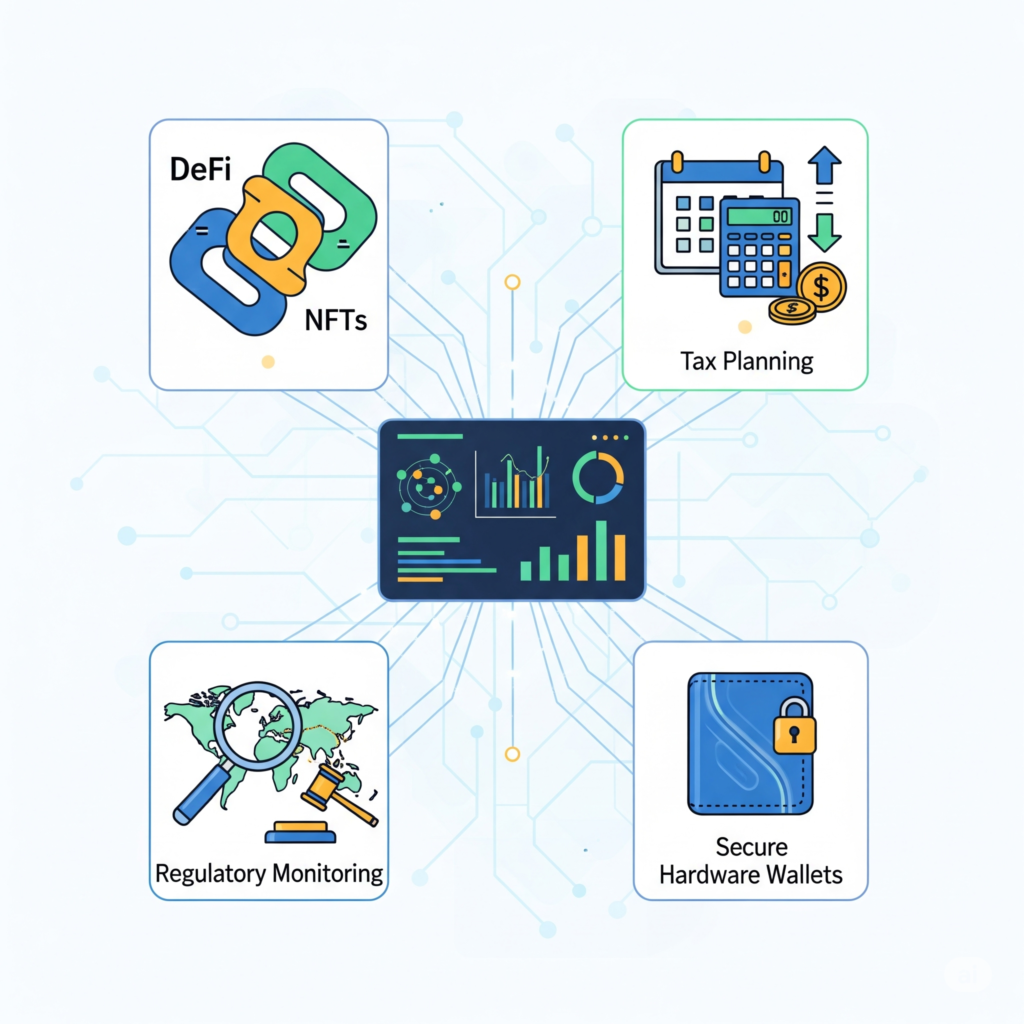
- Diversify cautiously: Explore DeFi or NFTs, but understand that these activities are also subject to taxation and legal scrutiny.
- Calculate cost basis accurately: Use the First-In-First-Out (FIFO) method to determine gains for tax purposes.
- Plan for tax payments: Set aside funds to cover CGT and income tax liabilities to avoid surprises during tax season.
- Monitor regulatory changes: The government may introduce specific crypto taxation laws in the future, so stay updated via reliable sources like Empire Crypto Data.
- Use secure wallets: Opt for hardware wallets or secure software wallets to protect your assets, as unregulated platforms carry risks.
FAQs: Common Questions About Crypto Taxation in Bangladesh
1. Is cryptocurrency legal in Bangladesh?
No, cryptocurrencies are illegal under the Foreign Exchange Regulation Act of 1947, the Anti-Terrorism Act of 2009, and Money Laundering Prevention Act of 2012. However, tax authorities still expect compliance with general tax laws for crypto-related income.
2. How are crypto profits taxed in Bangladesh?
Profits from selling or exchanging cryptocurrencies are subject to a 15% capital gains tax, while income from mining, staking, or payments in crypto is taxed as regular income (0-25% based on your income slab).
3. Do I need to pay VAT on crypto transactions?
The application of 15% VAT to crypto transactions is unclear, as there are no specific guidelines. Consult a tax professional for clarity.
4. What records should I keep for crypto tax reporting?
Maintain logs of all transactions, including dates, amounts, acquisition costs, and fair market values at the time of sale or receipt.
5. What happens if I don’t report my crypto income?
Non-compliance can lead to heavy fines, imprisonment, or asset seizure under tax and anti-money laundering laws.
6. Can I deduct expenses from crypto taxes?
You can deduct the cost of acquiring cryptocurrencies for capital gains calculations, but expenses like transaction fees or holding costs are not deductible.
7. Are there any tax exemptions for cryptocurrencies in Bangladesh?
Currently, there are no specific tax exemptions for legal crypto earnings BD.
The Future of Crypto Taxation in Bangladesh
The future of crypto taxation laws in Bangladesh is uncertain but promising. The government’s National Blockchain Strategy indicates a willingness to explore blockchain technology, which could lead to a more structured regulatory framework for cryptocurrencies. Experts like Dr. B M Mainul Hossain advocate for regulation over bans, suggesting that Bangladesh could adopt policies aligned with global standards. International recommendations from bodies like the OECD may also influence future tax legislation, potentially introducing specific provisions for cryptocurrency tax BD.
As cryptocurrencies gain traction globally, Bangladesh faces pressure to balance innovation with financial stability. Legalizing and regulating crypto could boost the economy by attracting foreign investments and fostering technological advancements. However, concerns about volatility and illegal activities will likely keep the government cautious. For now, investors must navigate the existing tax framework while staying vigilant about regulatory updates.
Conclusion: Stay Informed and Invest Wisely
Navigating crypto taxation laws in Bangladesh requires a deep understanding of the current legal and tax landscape. While cryptocurrencies remain illegal, the National Board of Revenue applies general tax laws to crypto transactions, making compliance essential to avoid penalties. By understanding capital gains tax, income tax on crypto Bangladesh, and record-keeping requirements, investors can minimize risks and stay on the right side of the law.
For the latest insights and updates on legal crypto earnings BD, Empire Crypto Data is your go-to resource. Whether you’re a beginner exploring Bitcoin or an intermediate investor diving into DeFi, staying informed is key to success in this rapidly evolving space. Share this guide with fellow crypto enthusiasts, consult a tax professional, and keep an eye on regulatory changes to invest wisely. Visit Empire Crypto Data at empirecryptodata.com for more tips and news to guide your crypto journey in Bangladesh.
About The Author
