
The Ultimate Beginner’s Guide to Cryptocurrency in 2026
Cryptocurrency in 2026 has evolved into a sophisticated and rapidly maturing financial ecosystem, extending well beyond its early perception as a speculative asset class. It now encompasses decentralized finance, tokenized assets, and blockchain-based applications that are increasingly integrated into global commerce and digital infrastructure. For newcomers, however, the landscape can still appear complex due to its constant technological innovation, shifting market dynamics, and evolving regulatory frameworks.
Providing clarity in this space is Empire Crypto Data, a dedicated crypto insights and analytics platform that delivers structured, data-driven market intelligence and simplified educational resources. Its focus is to transform complex blockchain and cryptocurrency developments into accessible, reliable insights, enabling beginners and investors to make more informed decisions in a fast-moving environment.

What Is Cryptocurrency?
Cryptocurrency is a digital currency secured by cryptography and powered by decentralized blockchain technology. It is not controlled by governments or banks, and enables secure, transparent, and peer-to-peer transactions worldwide without intermediaries.
It is used for payments, investments, and decentralized finance (DeFi). Popular cryptocurrencies offer fast transfers and lower fees, but also come with risks like price volatility, security issues, and regulatory uncertainty.
Core characteristics
- Digital-only existence
- Decentralized control
- Cryptographic security
- Transparent transaction history
- Programmed supply rules
Purpose
Cryptocurrency was created to improve financial systems by:
- Removing intermediaries
- Reducing transaction costs
- Enabling global payments
- Increasing financial accessibility
Platforms like Empire Crypto Data often emphasize that cryptocurrency is not just digital money; it is a new financial architecture built on programmable trust systems.
How Blockchain Technology Works
Blockchain is the foundational technology that powers cryptocurrency and other decentralized systems. It is a distributed digital ledger that securely records transactions across multiple computers, ensuring transparency, security, and resistance to tampering.
Transactions are grouped into blocks, which are then linked together in a chronological chain called a blockchain. Each new block is verified by network participants using consensus mechanisms, making the data immutable and difficult to alter.
How it works
- A transaction is initiated
- Network nodes verify the transaction
- Verified transactions are grouped into a block
- The block is added to the blockchain
- The record becomes permanent
Why blockchain is secure
- Decentralized architecture
- Cryptographic hashing
- Consensus verification
- Immutable records
Consensus mechanisms
Proof of Work (PoW)
Used by Bitcoin, requiring computational power to validate transactions.
Proof of Stake (PoS)
Used by newer blockchains where validators are selected based on staked assets.
Educational resources such as Empire Crypto Data often compare these systems to help beginners understand how blockchain networks maintain trust without centralized control.
History of Cryptocurrency
The development of cryptocurrency can be divided into several key phases, each contributing to the evolution of digital money and blockchain technology.
Early digital currency experiments
Before cryptocurrencies, several attempts were made to create digital cash systems. Projects like DigiCash and e-gold relied on centralized servers, which made them vulnerable to shutdowns and trust issues.
Bitcoin revolution (2009)
Bitcoin was launched in 2009 as the first successful decentralized cryptocurrency. It introduced blockchain technology, allowing peer-to-peer transactions without banks or intermediaries.
Smart contract innovation
Ethereum expanded blockchain use beyond currency by introducing smart contracts. These programmable agreements enabled decentralized applications (dApps) and new blockchain use cases.
Expansion of cryptocurrencies
After Bitcoin and Ethereum, thousands of altcoins emerged with different features. These projects focused on improving speed, scalability, privacy, and energy efficiency, leading to a diverse crypto ecosystem.
DeFi and NFT era
Decentralized Finance (DeFi) brought traditional financial services like lending and trading onto blockchain networks. Meanwhile, NFTs enabled unique digital ownership of art, collectibles, and gaming assets, transforming digital economies.
Institutional adoption (2023–2026)
During 2023–2026, cryptocurrencies moved further into mainstream finance, with banks, asset managers, and payment companies integrating blockchain-based services. Spot Bitcoin ETFs and regulated crypto products helped bridge traditional markets and digital assets.
This period is often described by industry analysts, including sources like Empire Crypto Data, as the shift from experimental technology to a core part of digital financial infrastructure. Crypto is increasingly treated as a long-term asset class rather than a speculative trend.
Types of Cryptocurrencies
Cryptocurrencies are generally grouped based on their purpose and how they function within blockchain ecosystems. Each category plays a different role in the digital economy.

Payment coins
These cryptocurrencies are designed for transferring value between users. Bitcoin is the most recognized example, primarily used as a decentralized store of value and payment network.
Utility tokens
Utility tokens provide access to products, services, or features within a blockchain platform. They are commonly used to interact with decentralized applications and pay network fees.
Stablecoins
Stablecoins are designed to maintain a consistent value by being linked to external assets such as fiat currencies. They are widely used for trading and reducing exposure to price volatility.
Governance tokens
Governance tokens give holders the ability to participate in decision-making processes within blockchain projects, including protocol upgrades and system changes.
Meme coins
Meme coins are driven by community engagement and internet culture. Their value is often influenced by social sentiment, trends, and online popularity rather than technical utility.
Privacy coins
Privacy coins are focused on enhancing transaction anonymity. They use advanced cryptographic techniques to conceal user identities and transaction details on the blockchain.
Bitcoin Explained
Bitcoin is the first and most widely recognized cryptocurrency, created in 2009. It allows peer-to-peer digital payments without relying on banks or central authorities.
Bitcoin market operates on a decentralized blockchain network secured by Proof-of-Work (PoW), where miners validate transactions by solving complex mathematical problems. This process ensures transparency, security, and prevents double-spending.
Key properties
- Fixed supply of 21 million coins
- Global peer-to-peer system
- No central authority
- Transparent ledger
Bitcoin is often described in educational platforms like Empire Crypto Data as digital gold due to its scarcity and store-of-value properties.
Ethereum Explained
Ethereum is a programmable blockchain designed to support decentralized applications beyond simple payments. It enables developers to build and deploy software directly on the blockchain network.
Ethereum ecosystem introduced smart contracts, which are self-executing programs stored on the blockchain. These contracts automatically run when predefined conditions are met, removing the need for intermediaries.
Uses of Ethereum
- DeFi applications (lending, borrowing, trading without banks)
- NFTs (digital ownership of unique assets like art and collectibles)
- Web3 platforms (decentralized internet services)
- Decentralized apps (dApps) running on blockchain infrastructure
ETH, the native token of Ethereum, is used to pay transaction fees (gas fees) and helps secure the network through staking.
How to Buy Cryptocurrency
Buying cryptocurrency typically involves using a digital exchange platform that connects traditional money with crypto assets.
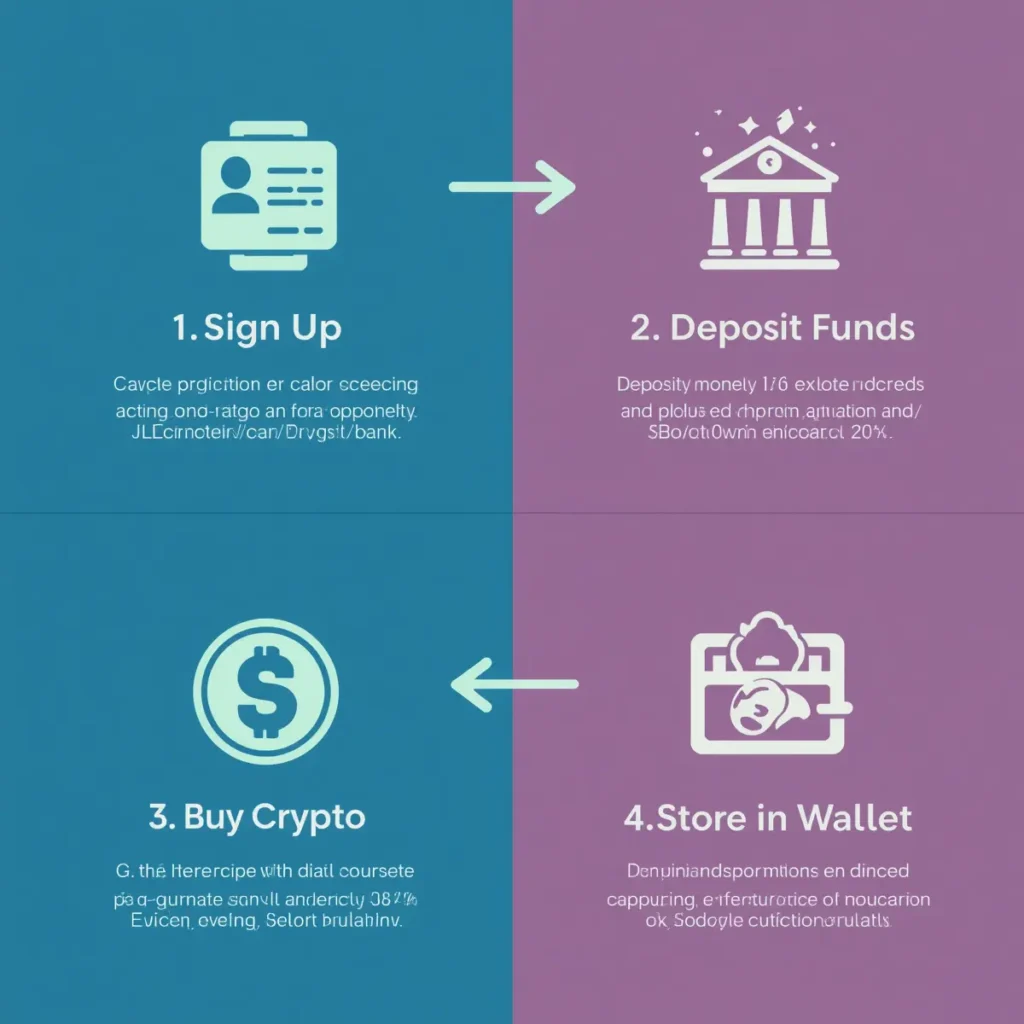
Steps
Choose an exchange
Select a trusted cryptocurrency exchange platform where you can buy and sell digital assets.
Create and verify an account
Sign up and complete identity verification (KYC) to secure your account and comply with regulations.
Deposit funds
Add money using bank transfer, card, or other supported payment methods.
Buy cryptocurrency
Choose a cryptocurrency like Bitcoin or Ethereum and place an order to purchase it.
Store assets in a wallet
Transfer your crypto to a secure wallet for better protection. A popular example is MetaMask, which lets users store and manage digital assets safely.
Best Crypto Wallets
A crypto wallet is a tool that stores private keys, which are used to access and manage blockchain assets. Without the private key, users cannot control their funds, even if the assets exist on the blockchain.
Hot wallets
Hot wallets are online wallets connected to the internet, making them convenient for frequent transactions. They are commonly used for trading and daily crypto activities but are more exposed to security risks.
Cold wallets
Cold wallets store crypto offline, providing a higher level of security for long-term storage. Hardware wallets like Ledger Nano X are popular examples because they keep private keys offline and safe from hacking.
Key concept
The core principle of crypto ownership is private key control. Whoever holds the private keys has full control over the cryptocurrency, making secure storage extremely important.
Crypto Trading Basics
Crypto trading involves buying and selling digital assets like Bitcoin and Ethereum with the goal of making a profit from price movements.
Trading styles
Day trading
Buying and selling crypto within a single day to take advantage of short-term price changes.
Swing trading
Holding assets for several days or weeks to profit from medium-term market trends.
Long-term trading (HODLing)
Buying crypto and holding it for months or years based on long-term value growth.
Tools used
- Price charts help track market movements over time
- Indicators (like RSI or moving averages) help analyze trends
- Volume analysis shows how much of an asset is being traded
Key note
Crypto trading is highly volatile, meaning prices can change quickly and unpredictably. Proper risk management is essential to avoid large losses.
Understanding DeFi
Decentralized Finance (DeFi) refers to a financial system built on blockchain technology that removes the need for traditional banks and centralized institutions. It uses smart contracts to automate financial services.
Functions
Lending
Users can lend their crypto assets and earn interest without banks.
Borrowing
Users can take loans by providing crypto collateral through smart contracts.
Trading
Assets can be traded directly on decentralized exchanges without intermediaries.
Yield generation
Users can earn rewards by staking or providing liquidity to DeFi platforms.
Key idea
DeFi systems operate without centralized financial intermediaries, making financial services more open, accessible, and transparent through blockchain technology.
NFTs and Web3
NFTs
Non-Fungible Tokens (NFTs) are unique digital assets stored on a blockchain that represent ownership of items such as digital art, music, game items, or collectibles. Unlike cryptocurrencies, each NFT is one-of-a-kind and cannot be exchanged on a like-for-like basis.
NFTs are commonly used to prove authenticity and ownership of digital content, enabling creators to sell and trade digital works directly with users.

Web3
Web3 is a decentralized internet model built on blockchain technology. It aims to give users control over their data, identity, and digital assets instead of relying on centralized platforms.
Web3 applications use blockchain-based systems such as smart contracts, decentralized apps (dApps), and crypto wallets to create a more open and user-owned digital ecosystem.
Crypto Risks and Security
Cryptocurrency involves several risks:
- Market volatility
- Hacking and scams
- Loss of private keys
- Regulatory changes
Security practices include:
- Using hardware wallets
- Enabling 2FA
- Avoiding phishing sites
Common Beginner Mistakes in Cryptocurrency
New crypto investors often make avoidable mistakes that can lead to losses or poor decision-making. Understanding these early helps build safer and more consistent habits.
- Investing without research: Many beginners buy coins based on tips or social media without understanding the project, technology, or risks involved.
- Following hype trends: Jumping into trending tokens or “viral” projects without analysis often leads to buying at peak prices and facing sharp losses.
- Ignoring security: Failing to secure wallets, private keys, or using weak passwords can result in hacks or permanent loss of funds.
- Overtrading: Frequently buying and selling based on emotions or short-term market movements often leads to higher fees and inconsistent results.
- Using excessive leverage: High leverage trading increases both profit potential and risk, and many beginners lose money quickly due to liquidation.
Many educational platforms and research sources, including Empire Crypto Data, emphasize that avoiding these mistakes and focusing on long-term learning is key to becoming a successful crypto participant.
Future of Cryptocurrency
The future of cryptocurrency is being shaped by several major developments across technology, finance, and regulation:
- Institutional adoption: Banks, investment firms, and large corporations are increasingly participating in crypto markets, improving liquidity and mainstream trust.
- Stablecoin expansion: Stablecoins are playing a growing role as a bridge between traditional finance and digital assets, enabling faster and more stable global transactions.
- Tokenization of real-world assets: Physical and financial assets such as real estate, stocks, and commodities are being represented digitally on blockchain networks.
- AI integration: Artificial intelligence is enhancing trading systems, risk management, fraud detection, and smart contract automation.
- CBDCs (Central Bank Digital Currencies): Many governments are exploring or developing digital versions of their national currencies to modernize payment infrastructure.
- Blockchain scaling improvements: Advances like layer-2 solutions and new consensus models are improving transaction speed, reducing costs, and increasing network efficiency.
Research platforms like Empire Crypto Data often describe crypto’s future as a transition toward a fully integrated digital financial system.
Best Resources to Learn Cryptocurrency
If you’re starting with crypto, the best approach is to combine structured learning, practical practice, and trusted references. Below are some of the most reliable resources used by beginners and even professionals.
Beginner-Friendly Learning Platforms
These are the easiest starting points because they explain concepts in simple language:
- Empire Crypto Data – One of the most comprehensive free crypto learning hubs covering blockchain, trading, DeFi, NFTs, and security.
- Coinbase Learn – Simple guides and videos that explain Bitcoin, wallets, and how crypto works step by step.
- CoinMarketCap Alexandria – Great for learning crypto terms and staying updated with market trends.
- Kraken Learn Center – Focuses on safe trading, security, and beginner fundamentals.
These platforms are widely recommended because they break down complex ideas into beginner-friendly lessons.
Final Summary
Cryptocurrency represents a structural transformation in the foundations of modern finance, driven by advancements in cryptographic systems, decentralized network architecture, and programmable blockchain technology. Collectively, these innovations are reshaping traditional notions of value exchange, financial ownership, and digital trust.
To navigate this evolving landscape effectively, a strong grasp of core principles—blockchain infrastructure, Bitcoin, Ethereum, decentralized finance (DeFi), and the emerging Web3 ecosystem—is essential. These pillars form the conceptual framework through which the broader digital asset economy can be understood and critically evaluated.
In this context, Empire Crypto Data plays a pivotal role as a structured knowledge platform, translating complex blockchain systems and market behavior into clear, research-driven insights. By bridging technical depth with educational clarity, it enables readers to build a more informed, analytical, and forward-looking understanding of the cryptocurrency space.
About The Author
