
Iran News: War Updates & Peace Prospects
The conflict involving Iran, Israel, and the United States has become one of the most important security issues in the Middle East. For that reason, Iran News continues to attract attention from governments, businesses, journalists, religious communities, and ordinary people around the world.
However, war reporting can be difficult to understand. Military claims may change. Casualty figures can be revised. Videos can be shared without a clear date or location. Furthermore, governments often describe the same event in very different ways.
Iran News: Iran War Background
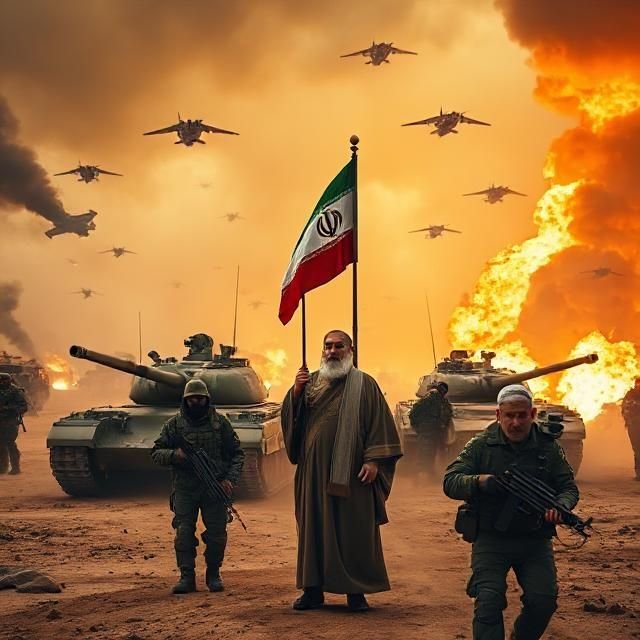
From Shadow Conflict to Direct War
For many years, Iran and Israel avoided a full direct war.
Instead, the two countries competed through intelligence operations, cyber activity, military pressure, regional allies, and attacks on targets outside their own borders.
Iran supported groups that opposed Israel. Israel, meanwhile, repeatedly targeted Iranian military activity and weapons networks in Syria and elsewhere.
This pattern was often described as a shadow war.
However, the situation changed in 2024.
Iran launched a large direct attack against Israel in April 2024. The attack followed an Israeli strike on an Iranian diplomatic compound in Damascus that killed senior Iranian commanders.
Israel and its partners intercepted most of the Iranian drones and missiles. Israel later carried out a limited response inside Iran.
Then, in October 2024, Iran launched another large missile attack against Israel. Israel responded with strikes against Iranian military targets.
Consequently, the old limits of the rivalry became weaker.
The June 2025 War
The most serious direct confrontation came in June 2025.
Israel launched a major military operation against Iranian targets. The operation included strikes on nuclear related facilities, military sites, missile capabilities, and senior military leadership.
Israel said its goal was to reduce Iran’s ability to develop a nuclear weapon and to weaken its military capabilities.
Iran responded with missile attacks against Israel.
The conflict continued for around twelve days and created fears that other countries could become involved.
The United States then entered the conflict directly.
US Strikes on Iran
On June 22, 2025, the United States struck three Iranian nuclear sites at Fordow, Natanz, and Isfahan.
The American government said the attacks were intended to severely damage Iran’s nuclear capability.
Iran condemned the strikes.
Later, Iran launched missiles toward Al Udeid Air Base in Qatar, where American forces are based. The response was limited enough to avoid an immediate, much wider US Iran war.
A ceasefire was announced on June 24, 2025.
Nevertheless, the ceasefire did not remove the main causes of tension.
The nuclear dispute remained.
US sanctions remained.
Iran’s regional alliances remained.
Israel’s security concerns remained.
Therefore, the end of direct fighting did not mean that the political conflict had been solved.
Current War Update: What Can Be Confirmed
Why Caution Is Necessary
When people search for Iran News during a war, they often want immediate answers.
Is there a new attack?
Has a ceasefire ended?
Was a nuclear facility damaged?
Did missiles hit a military base?
Are peace talks taking place?
These questions are important. However, answers can become outdated quickly.
A military statement may describe an event before independent sources can verify it. Likewise, social media may show an old video as if it were new.
Therefore, a responsible article should not invent current battlefield developments.
The Established Situation
The major established direct confrontation between Iran and Israel occurred in June 2025, followed by a ceasefire.
The United States had also directly attacked Iranian nuclear sites during that conflict.
Those events created a new security reality.
Iran demonstrated that it could launch large numbers of missiles toward Israel. Israel demonstrated its ability to conduct long range strikes against Iranian targets. The United States demonstrated that it was willing to use direct military force when it believed Iran’s nuclear capability posed a major threat.
As a result, future crises could develop more quickly than they did during the earlier shadow war.
What a New Crisis Could Look Like
A future escalation could begin with a relatively small event.
For example, a strike on a military commander could trigger retaliation. A nuclear dispute could lead to a new attack. A regional armed group could attack Israel or American forces. Israel could then respond, while Iran could decide to retaliate directly.
Because several countries and armed groups are connected, escalation could spread quickly.
Therefore, the absence of a major war does not necessarily mean the region is permanently stable.
Israel’s Position
Why Israel Considers Iran a Threat
Israel has repeatedly said that Iran’s nuclear program is a major security concern.
Israeli leaders have also pointed to Iran’s ballistic missiles, drones, regional partnerships, and opposition to Israel.
From Israel’s perspective, allowing Iran to develop a nuclear weapon would create an unacceptable risk.
For that reason, Israel has supported diplomatic pressure, economic pressure, intelligence operations, and military action.
Israel’s Military Strategy
Israel has a highly advanced military and strong intelligence capabilities.
It also has layered air defense systems and close military cooperation with the United States.
These advantages help Israel defend its territory and conduct long range operations.
However, military power has limits.
Iran is a large country with significant population, territory, underground facilities, missile systems, and military infrastructure.
Therefore, completely removing Iran’s capabilities through air strikes would be extremely difficult.
The Risk of Repeated Attacks
Repeated military attacks can create another problem.
Instead of removing a threat permanently, they can encourage the targeted country to strengthen its defenses.
Iran could respond by improving missile systems, air defenses, underground facilities, and nuclear capabilities.
This could create a continuing cycle.
Israel attacks because it fears Iranian capabilities.
Iran expands its capabilities because it fears Israeli attacks.
The cycle then continues.
Breaking that cycle requires more than military action.
Iran’s Position
National Sovereignty
Iran views attacks on its territory as violations of national sovereignty.
Iranian leaders argue that the country has the right to defend itself and maintain military capabilities.
They also reject the idea that Israel should decide which Iranian technologies are acceptable.
This position is central to Tehran’s political messaging.
The Nuclear Program
Iran has consistently stated that its nuclear program is peaceful.
The country has argued that it has the right to peaceful nuclear technology under international law.
However, international concerns have focused on uranium enrichment levels, stockpiles, advanced centrifuges, inspections, and the possibility of developing a nuclear weapons capability.
The disagreement is therefore not simply about whether Iran has a nuclear program.
It is about what Iran can do, how far its capabilities can develop, and how those capabilities can be verified.
Iran’s Military Deterrence
Iran has invested heavily in missiles and drones.
These systems form an important part of its deterrence strategy.
Because Iran does not possess an air force equal to Israel or the United States, missiles provide a way to threaten distant targets.
Iran also maintains relationships with regional armed groups.
Together, these capabilities give Tehran several ways to respond to pressure.
However, they also increase tensions with Israel and the United States.
The United States and the War
Why Washington Matters
The United States is deeply connected to Middle Eastern security.
It has military bases and partnerships throughout the region. It also provides major military support to Israel.
Therefore, a serious Israel Iran conflict can quickly become an American concern.
The June 2025 strikes demonstrated this clearly.
American Goals
US policy toward Iran has generally focused on several issues.
These include preventing a nuclear weapon, protecting American forces, supporting Israel, limiting Iran’s regional influence, and maintaining security for international shipping.
At the same time, American leaders must consider the enormous cost of a wider war.
A prolonged conflict could threaten American troops, regional allies, energy markets, and global economic stability.
Consequently, Washington faces a difficult balance between deterrence and escalation.
The Danger of Direct US Iran War
A direct war between Iran and the United States could become much larger than the 2025 confrontation.
Iran could use missiles and drones against American positions.
It could also rely on regional partners to create pressure.
The United States, meanwhile, has powerful air, naval, intelligence, and missile capabilities.
Such a conflict could affect Iraq, Syria, Lebanon, Yemen, the Gulf, and international shipping.
Therefore, even strong opponents have reasons to avoid a prolonged war.
Regional Impact

The Gulf
The Persian Gulf is one of the most important economic areas in the world.
Large volumes of oil and gas pass through the region.
The Strait of Hormuz is particularly important.
Iran’s location near this waterway gives it strategic influence.
If conflict threatened shipping, insurance prices could rise. Oil prices could also increase because markets respond to the risk of supply disruption.
Therefore, an Iran conflict can affect consumers far beyond the Middle East.
Iraq
Iraq has close political, religious, economic, and cultural ties with Iran.
At the same time, Iraq has important relations with the United States.
This creates a difficult position for Baghdad.
Iraq does not want its territory to become a battlefield between Tehran and Washington.
Therefore, Iraqi leaders have strong reasons to support de-escalation.
Lebanon
Lebanon is strongly affected by the Iran Israel rivalry because of Hezbollah.
Hezbollah has political and military influence in Lebanon and has a close relationship with Iran.
Its conflict with Israel can therefore become part of a wider regional crisis.
However, another major war in Lebanon could create enormous humanitarian and economic costs.
Syria
Iran developed strong ties with Syria during the Syrian civil war.
Israel has repeatedly attacked Iranian or Iran linked military targets in Syria.
Changes in Syria’s political and security environment can therefore affect Tehran’s regional strategy.
Yemen and the Red Sea
The Houthi movement in Yemen has become another important part of the regional conflict.
Houthi attacks on shipping have affected the Red Sea and international trade.
This means that Middle Eastern military tension can directly affect global supply chains.
A conflict that begins between two states can therefore produce consequences for businesses and consumers worldwide.
Peace Prospects
Why Peace Is Difficult
Peace between Iran and Israel faces major obstacles.
First, the two governments deeply distrust each other.
Second, they disagree about Iran’s nuclear program.
Third, Iran supports regional groups that Israel considers threats.
Fourth, Israel has strong concerns about Iranian missiles and drones.
Fifth, the United States is closely connected to Israel and has its own disagreements with Tehran.
Therefore, a peace process would need to address several issues at once.
Peace Does Not Have to Mean Friendship
Iran and Israel do not necessarily need to become friends.
They could instead develop agreements designed to prevent war.
For example, they could establish communication channels, reduce attacks on certain targets, support nuclear monitoring, and create rules for crisis management.
Such measures would not remove their political differences.
However, they could reduce the chance that disagreements become a major war.
Nuclear Diplomacy
Nuclear diplomacy is probably one of the most important paths toward stability.
A new agreement could potentially address uranium enrichment, inspections, stockpiles, advanced centrifuges, sanctions, and economic access.
For Iran, sanctions relief would be a major incentive.
For the United States and European governments, stronger verification would be important.
For Israel, a credible system that prevents Iran from developing a nuclear weapon would be a major security concern.
Therefore, a workable agreement would need to address the interests of several parties.
Conclusion
The major direct confrontations of 2024 and 2025 demonstrated that the old shadow war can become open warfare. Israel has shown its willingness to strike Iranian targets. Iran has demonstrated its ability to launch missiles against Israel. The United States has also shown that it may use direct military force when it believes Iran’s nuclear program presents a major threat.
Future Iran News headlines could continue to affect international politics, energy markets, diplomacy, and regional security.
About The Author
